

The latest from the Environment Society of Australia - click here to see all the news
Pumped over Iemma's biofuel plan
THE State Government's announcement that its fleet of more than 3000 vehicles will use biofuels has raised the hopes of businesses looking to build ethanol plants in rural NSW.
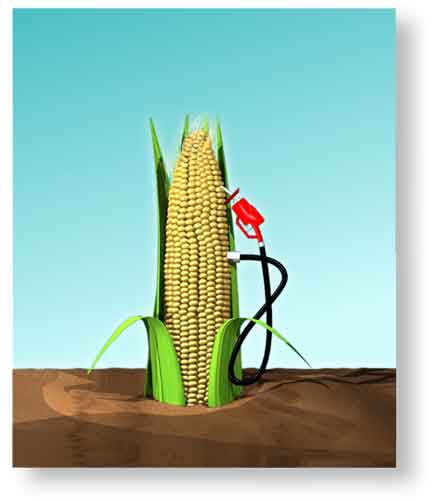 The Government fuel contract ends on June 30 next year and
the Premier, Morris Iemma, said yesterday that tenderers for
the new contract would have to provide biofuels such as
ethanol-blended petrol. He said the decision would help cut
the Government's fuel bill and assist rural communities and
the environment.
The Government fuel contract ends on June 30 next year and
the Premier, Morris Iemma, said yesterday that tenderers for
the new contract would have to provide biofuels such as
ethanol-blended petrol. He said the decision would help cut
the Government's fuel bill and assist rural communities and
the environment.Ethanol helps petrol burn more cleanly, and farmers have long hoped that the development of ethanol made from crops such as wheat will ensure better prices for their produce.
Mr Iemma made the announcement at the Manildra ethanol plant near Nowra and urged the Federal Government to mandate E10, a 10 per cent ethanol blend, in fuel. The Federal Government has set a target of 350 million litres of biofuel use by 2010.
E10 can safely be used in most vehicles built after 1986. Car makers have agreed to start putting labels on petrol caps of new cars stating E10 is acceptable.
Australia now produces only about 100 million litres of ethanol a year, less than 1 per cent of fuel use.
Australian Ethanol plans to build an plant at Coleambally in the Riverina and another in the Central West at either Forbes or Narromine.
Primary Energy plans to build a plant at Gunnedah, in the state's north-west. The managing director of Primary Energy, Matthew Kelley, said that after years of "underhanded claims" about ethanol its value was being recognised.
Environment Minister welcomes BP's ethanol blend to Canberra (a media release from the minister)
The Australian Minister for the Environment and Heritage, Senator Ian Campbell, has welcomed the environmental benefits of BP Australia’s E10 ethanol blend fuel launched yesterday in Canberra.
Senator Campbell said work undertaken by the CSIRO has confirmed that ethanol blends have the potential to deliver a reduction in greenhouse gas emissions of between two and five per cent, when compared with neat petrols.
"The availability of E10 fuel, which is a blend of 10 per cent ethanol and unleaded petrol, is an important step towards building consumer confidence in ethanol blends," Senator Campbell said.
"Much of Australia’s ethanol is made from starch waste derived from grain. To convert this type of waste into a workable fuel is a sensible way forward.
"The Prime Minister’s announcement in September on the Government's assistance package to the biofuels industry has prompted a range of initiatives from the petroleum sector.
"The news from BP means that moves to have the Australian Government car fleet use ethanol blends such as E10 are now more feasible."
Biofuels, such as biodiesel produced from
oil-seeds, and ethanol produced from wood or sugarcane, can be a
greenhouse-neutral, renewable energy source for use in transport
vehicles, stationary engines, and small electricity generators.
In the short to medium term, biofuels made from woody biomass are
unlikely to be competitive with liquid fuels derived from oil. However,
cheap oil supplies are expected to dwindle during the first half of this
century, leading to rising prices for petrol and diesel and competition
from replacement fuels, including bio-fuels such as ethanol and
methanol.
Ethanol is currently favoured for use as a transport fuel in internal
combustion engines, while methanol appears better suited to stationary
engines and fuel cells.
The development of competing liquid fuels is made difficult by
uncertainty surrounding the likely exhaustion date of oil. New oil
fields will be discovered, and developments in extraction technology
will allow previously unexploited fields to be tapped, although both of
these options are likely to produce oil at higher prices and lower net
energy yield than those currently prevailing.
Further impediments to the development of bio-fuels include uncertainty
about future transport technologies and their fuel sources, and the
ability of major oil producing nations to influence current prices by
adjusting production volumes.
To encourage and support investment in the development of bio-fuels in
Australia in this uncertain environment, some level of government
subsidy or policy support would be needed.
For example, for technological, environmental, strategic or balance of
payments purposes, the Australian Government could impose a requirement
to use a mandated percentage of bio-fuels in transport fuels, similar to
the Mandatory Renewable Energy Target for electricity users.
Australia could well be a world leader in bio-fuel technology when
petroleum alternatives are necessary and could confirm its clean, green
image internationally.
The Australian Government and industry are currently investigating
opportunities for sustainable development and use of renewable transport
fuels under the Renewable Energy Action Agenda.
There are practical production uncertainties associated with bio-fuels.
For example, different biomass types have different potential yields of
ethanol, with most lignocellulosic materials giving lower ethanol yields
than many annual plants. However, this may be partially offset by
growing large areas of woody plants in low to mid rainfall areas to
produce feedstocks at low prices.
There are also new, efficient processes being developed for converting
lignocellulosic material to ethanol, but they have yet to be proven at a
commercial scale, and need more investment in their development.
Mid to low rainfall areas have some advantages in producing woody
biomass for bio-fuel production, such as the ability to provide a
year-round supply of biomass.
Further investigation of the bio-fuels industry is warranted because of
its potentially large scale, and its ability to use a wide range of
feedstocks, including low-value waste materials from other processing
industries. The area of biomass needed to produce liquid fuels for
Australia's needs has been estimated to be in the range 12-31 million
hectares, depending on the assumptions and processes used.
If part of the feedstock for a bio-fuels industry were provided by tree
crops in mid to low rainfall areas, large areas would be needed, with
correspondingly large natural resource management benefits. These
potential benefits should be considered when comparing biomass with
other potential feedstock sources.
Bio-fuels have the potential to be greenhouse-gas neutral (depending on
the feedstock), as atmospheric carbon is recycled into biomass through
the carbon cycle.
